Showing posts with label PCS. Show all posts

Thursday, June 21, 2018

UK Requires Pets on TOR

Even though the United Kingdom may have ruled your household goods are exempt from Her Majesty’s Value Added Tax, you must list your pet(s) because they may be subject to VAT.


As soon as you know your PCS post is to the UK, go online and complete a Transfer of Residence form listing household goods, cars and your pets. The UK will send you a TOR reference number.

Not having a TOR reference number will not prohibit your pet from entering the UK. But, you may have to pay VAT on arrival. If you do pay, you have 12 months to apply for reimbursement.

Island Paradise PCS

We highly recommend using Air Animal’s Destination Pet Express for all active duty military personnel moving pets to Okinawa, Japan; Catania, Italy; and other island posts. Both Japan and Italy have only two or three airports that have Custom’s clearance for pets. That means the pets land and then either transfer to a domestic airline or travel by land and ferry to reach your new post.


These transfers can add $2,500 to $3,500 to the base cost of a move. Air Animal Destination Pet Express handles the details from the airport to your new post home so you don’t have to. “If you’re being stationed on an island, request an estimate online as soon as you get written or verbal orders,” advises Jessica, international pet move manager. “You'll hear from your assigned pet mover in a timely manner based upon the move date you select.”

Cute and Tough to Relocate

Many airlines limit the types of breeds they will ship—especially if the departure or arrival airport temperature is above 80 degrees Fahrenheit. Mushy-faced breeds such as bulldogs, boxers and Himalayan cats are typically on the no-fly lists because their airways are genetically constricted and these breeds have had problems breathing during flight.


United, American and Delta airlines have all announced limits on the types of animals and breeds they will accept on board. (Links to
United PetSafe
American
Delta

You want your fur baby to be comfortable and safe during a move. "Active duty military who redeploy frequently may wish to consider adopting a pet under 25-inches tall with a pointy nose,” advises Maria, international pet move manager. “Depending on the season, we may be able to get your pet to your destination and not able to fly them out when you need to get to your next duty station. We often work with a buddy who can foster the pet until the temperatures allow air flight for pets.”

Going to Minot

Prepare to drive your pet to a distant airport if you’re posting to or from Minot, North Dakota or Alaska among others.


“Our Air Force clients love Great Danes,” said Jessica, international pet move manager. “When you adopt a large pet, you get a lot of love and more headaches for your move because large 700P kennels will not fit through the doors of the 737s now flying most airline routes,” she counsels. Large dogs must be driven to a major hub to catch a large jet. Then, owners must drive to the destination hub to retrieve their pets.

Pets less than 25-inches tall, paws to the top of the ears, can relocate more easily because their travel kennels fit on most airliners. The largest accepted on the most-frequently used airplanes is a 500p which is 40"Lx27"Wx30"H. Watch our video to learn more about travel kennel requirements. You might also find the 411 on Travel Kennels helpful.

Which Vet to Get?

Active duty military have the option to use a military veterinarian for all required treatments, tests and endorsed pet health certificates for most countries that follow the European Union pet import rules. For example, Japan, Korea and the United Kingdom also follow EU protocols. If your PCS is anywhere else, you must have a USDA-endorsed health certificate when leaving the U.S. with your pet.


A pet health certificate is required when returning to the U.S., but USDA-endorsement is not required.

If your posting is to Australia, United Arab Emirates or other non-typical location, call your veterinarian as soon as you receive orders. If your veterinarian is not familiar with the requirements, we can help you through our streamlined pet health certificate service. Air Animal’s expert pet movers will help you follow all the import rules to a “T” because these countries don’t make special allowances for U.S. military personnel. A USDA-endorsed health certificate will be required.

Grants to Pay for Pet PCS

Dogs on Deployment is one of several organization which offer grants to help active duty military E-6 and below relocate their pets. You’ll be asked to provide financial information, orders and other information. Many of our PCS clients have used Dogs on Deployment and paid it forward later by making a donation.


Funding for a PCS move isn’t released until orders are cut. Air Animal’s pet movers know the drill and they know things change because they’ve been there. “Our family was moving from Ohio to Missouri when my dad was redeployed. The moving van had left and we were in the car ready to pull out when Dad got a call. They asked if he wanted to move to Missouri as planned or if he wanted to go to Boston. We went to Boston,” said Deandra, international pet move manager. “We know we have to be flexible because you serve our country and you have to go where you’re needed.”

PCS to Japan, Guam, South Korea and Hawaii

Rabies Antibody Blood Test a Must

If you are active duty military and plan moving your pet with you when your Permanent Change of Station orders come through, make the time to get a rabies antibody blood test (FAVN-OIE). Some of the most-frequent PCS duty stations are in countries that require the test. You won’t need one if you’re relocating to the European Union.

On-base veterinarians can provide the required blood test, which is sent to Ft. Sam Houston for processing. Off-base veterinarians use a lab in Kansas. When you use Air Animal’s app, the test date will be on your phone or desktop so you never lose track of it. You’ll be ready when it’s time to get a pet health certificate for the move.

Special situations
  • If you’re moving to Japan and living on base, the 180 days of pre-export U.S. residence for your pet is waived.
  • If you’re posting to Guam, you can’t take a pet and you can’t get your pet off the island if it is over 25 inches tall—paws to top of the ears. The airline serving Guam limits flight kennel sizes. The largest accepted is 500p which is 40"Lx27"Wx30"H. Watch our two videos to learn more about travel kennel requirements and the 411 on Travel Kennels.
  • For PCS to South Korea, active-duty military may clear South Korean customs without a custom’s broker. That means our affordable Timeline & Ticket rates are an option for you.
  • Hawaii is part of the United States. It's also an island that doesn't have rabies so a FAVN-OIE is required. Beginning Aug. 31, 2018 the at-home mainland quarantine for dogs and cats entering Hawaii will be 30 days from the day the rabies antibody blood test (FAVN-OIE) reaches the testing lab. That’s down from 120 days.

Thursday, March 12, 2015

Orders to Ship Out

By Melissa Cortes-De Armas
Military Relocation Specialist


Luna and Gus lounging in their far flung corner of East Africa.

Military families and pets are good soldiers, too. We have to be. I know. My husband is active duty Navy now stationed here in Tampa at MacDill. I know the stresses and strains of military life and I love helping military families relocate their pets overseas.


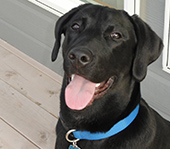
In October, Seth and Deborah moved to East Africa with their two black lab-collie fur babies. They did a lot of research and had long conversations with several pet movers. According to Seth, he really appreciated Air Animal’s service and in-depth knowledge of overseas military pet moves when a slight hiccup over using the most up-to-date country-specific paperwork cropped up.

Seth posted his praise on Google. “Melissa was responsive to our barrage of questions and concerns. She also interacted very positively with our veterinarian and family who watched our dogs while we got settled in East Africa.

"Make sure that you as pet owners double check that you’re aware of the most current paperwork and requirements for entry into the country that you’re moving into. These requirements can and do change frequently," he wrote.

“It’s highly doable to bring your furry little friends along with you. Africa is already feeling more like home now that we have our dogs with us. Well worth the effort and cost!” he concluded. Start five to 10 weeks before your move. If you are moving to Hawaii, Guam, New Zealand, Australia, United Arab Emirates, Singapore or Japan start six months beforehand. Call Air Animal. Ask every question in the book and research our website. Air Animal provided origination services for Luna and Gus because Seth was in Africa. We also hired one of our partners to provide receiving services in Africa.

There are pet move kits online and at the pet stores. They don’t include microchipping your pet, streamlining the international health certificate process or all the tags and labels needed. Air Animal can also provide the travel kennel sized for your pet 10 days before travel so your friend can get familiar with the kennel.
Recently my colleague Jessica Nickler, helped a family relocate overseas and she arranged for DogsOnDeployment.org to assist with some of the animal relocation charges. Our network is invaluable to our clients.

We frequently help military personnel relocate their pets to Japan, Germany, Italy, Hungary and Hawaii. While Hawaii is inside the United States, this island state has very specific animal travel rules and regulations because it’s an island. We know when Japanese rules require a 180-day in-home quarantine here in the U.S. and when that quarantine isn’t necessary.

Contact us to find out more. If you’re being reassigned or travel regularly with your pet, sign up for our free e-newsletter.